Essays, observations and ideas
Thoughts
Writing on technology, leadership, books, creativity, memory, architecture and the many meanings of belonging.
About this journal
Every project begins with an idea. Some become products. Some become novels or paintings. Others remain thoughts worth sharing.
This journal brings together reflections from a life spent across technology, product leadership, travel, writing and art—along with the questions that connect them.
Recurring themes
From the journal
Essays and reflections published on nban.io. The newest writing appears first.
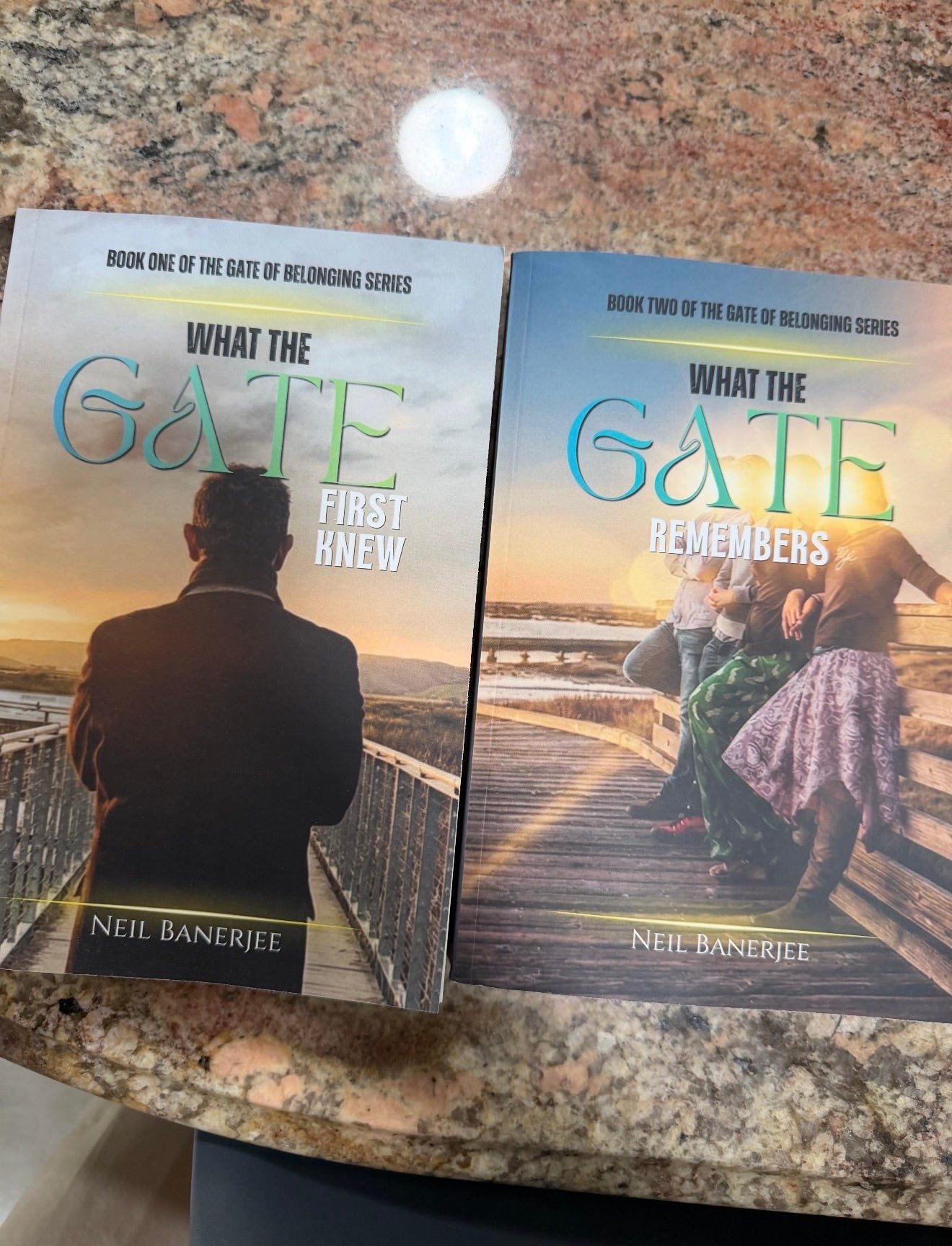
47 Lines I’m Letting Leave the Books
47 quotes by author Neil Banerjee from What the Gate First Knew and What the Gate Remembers, exploring belonging, family, memory, home, love, language and the places that shape us.

The Shape of the Space He Left Behind
For eleven years, Leo was part of every journey our family made. Losing him made me reconsider something I thought I understood: what it means to belong, what makes a place home, and how the smallest rituals of love remain long after someone is gone.

How I Made My Book Trailers with AI
I didn't know book trailers were a thing — until a reader on Threads asked where to find mine. Here's how I made two with AI: the tools, the honest process, and the decisions no tool could make.

What Does It Mean to Belong?
There is a green gate in a quiet neighborhood called Apcar Gardens in Asansol.

Edge AI: Advantages, Challenges and Use Cases
Cloud AI has a latency problem, a privacy problem, and a cost problem. Edge AI solves all three — and introduces constraints of its own. A look at what moving inference onto the device actually buys you, and what it costs.

Designing Intelligence
Where others see boundaries between nations, technologies, and ideologies, I see interfaces waiting to be bridged. Designing meaningful AI begins from that same worldview.