The Shape of the Space He Left Behind
What losing our dog Leo taught me about home, family, and belonging
On Friday, August 14, 2026, at 5:15 pm PST , Leo left us. My wife and I were beside him. Our children were on FaceTime, staying with us through those final moments. They were hundreds of miles away, but somehow, the whole family was together.
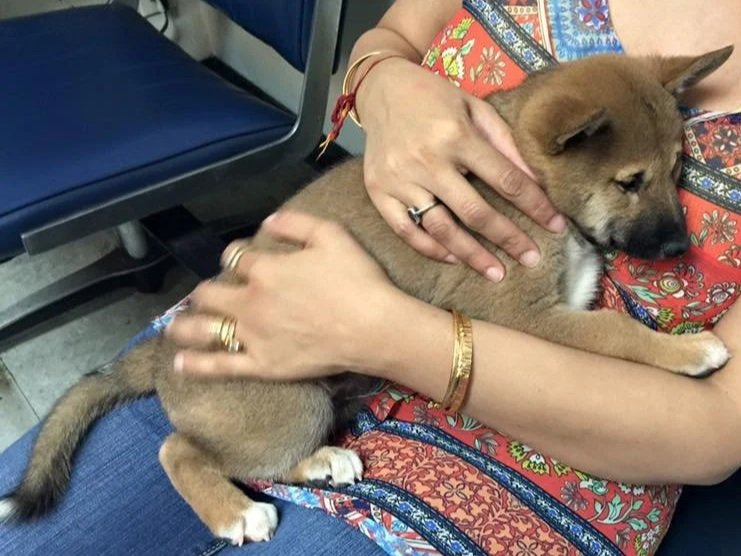
Leo entered our lives on August 28, 2015, after the mandatory 8-week period from his birth on July 4th, 2015.
Written that way, a life looks strangely measurable: two dates and the distance between them. But that is not how a life occupies a family.
Leo was there in the mornings and when we came home. He was there through celebrations, disagreements, illnesses, changes, departures, returns, and thousands of days that seemed entirely ordinary as we lived them.
Then, suddenly, he wasn't.
And I began to understand something about belonging that I thought I already knew.
His Four People
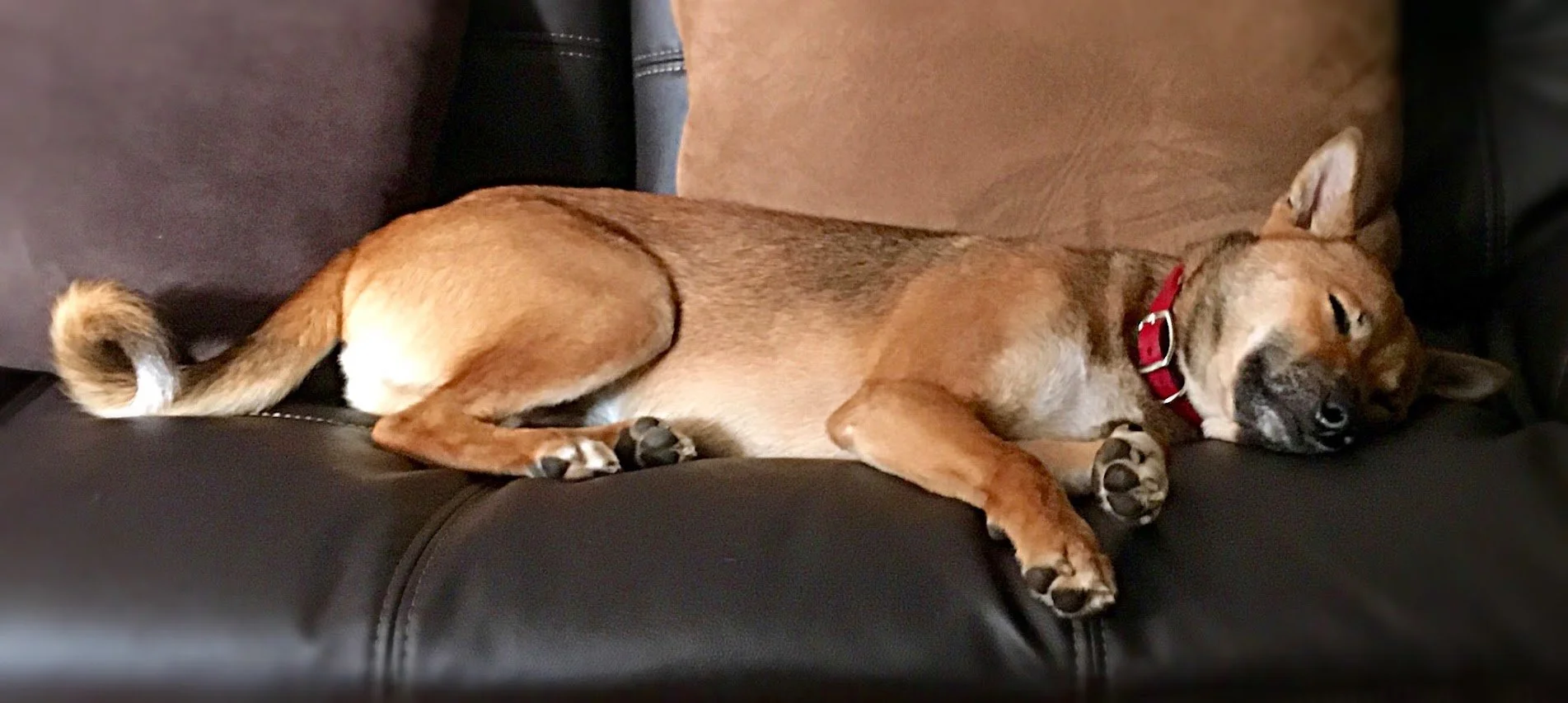
Leo was a Shiba Inu, and anyone who knows Shibas will understand that affection does not necessarily come indiscriminately. Leo was never particularly social with other dogs or with people he didn't know. His trust had to be earned, and earning it could take time.
But there were four people he never had to evaluate.
Us.
That was his family. And Leo had a different relationship with each of us.
For years, my work required international travel. I could be gone for days, sometimes far across the world. Somehow, when I was coming home, Leo seemed to know. And there he would be to greet me—with that unmistakable little Shiba squeak and his curled Cinnabon tail wagging.
I had crossed countries and oceans. Leo's response was much simpler.
“You came back”.
My daughter had a different problem. Sometimes she would have friends in her bedroom and close or lock the door. Leo considered this unacceptable. He would kick and scratch the door until someone let him inside. Then he would enter, survey the situation, satisfy himself that he understood what was happening—and leave.
Apparently, family privacy still required Leo's inspection.
With my son, the relationship was more conspiratorial. Leo knew when he was playing games on the television. He also knew exactly where we kept his toys. So he would go to that spot and kick it. The message was perfectly clear.
“Enough of your game. Play with me”.
And then there was my wife. She built so much of our family life around making sure Leo was part of it. She never left him at a daycare or boarding facility when we traveled. If we went somewhere as a family, Leo came too.
That was simply the rule—not a rule we ever wrote down, but the kind of rule that exists because nobody can imagine doing otherwise.
Leo Had Rules Too
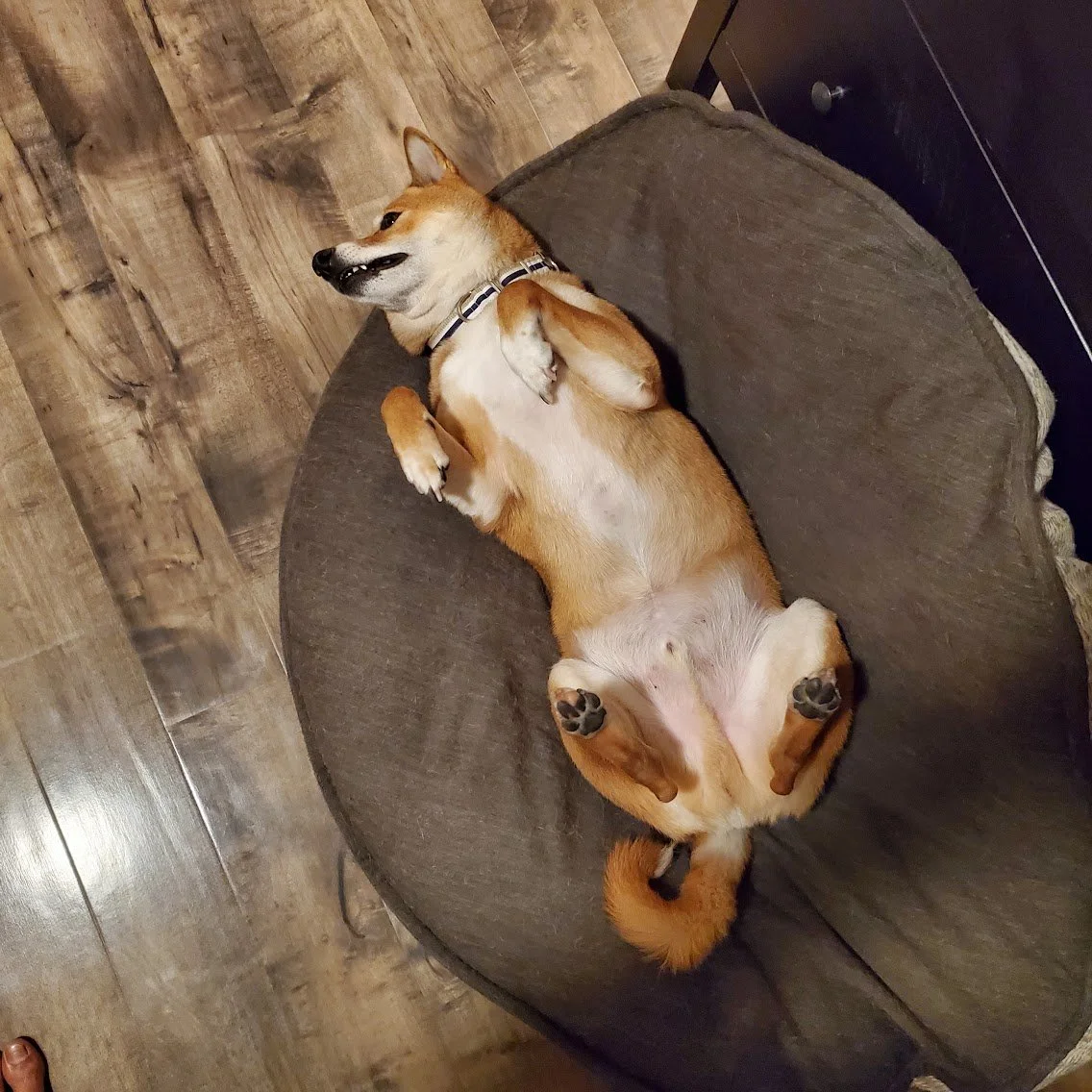
Leo understood our house with extraordinary precision. He knew exactly which kitchen door concealed his treats. And not just any treats. His recent favorites were those special chicken treats from Costco.
When he wanted one, subtlety was unnecessary.
He kicked the door.
We understood.
At night, wherever we might be, there was another rule. Leo slept in our bedroom. He had his particular place in the corner.
Hotels could change. Houses could change. Cities could change.
His people were there. His corner was there.
So he was home.
These are the things that seem almost comically small when a dog is alive: a kicked cabinet, a lick against a closed bedroom door, a squeak when you return from a trip, a curled tail, a particular corner of a bedroom.
Then the dog is gone.
And suddenly those tiny things become the architecture of an entire life.
Wherever We Went, He Went

Because my wife would not leave Leo behind, our vacations were shaped around him. Traveling with a dog requires planning—where you can stay, how far you can drive, where you can stop, what you carry.
But we never thought of it as a sacrifice.
It was simply how our family traveled.
Nobody had to ask, What will we do with Leo while we're away?
Leo was coming.
Because the family was going.
Looking back, I realize how much that says about belonging. We often think belonging means being welcomed somewhere. But perhaps there is another, more fundamental form of belonging:
Being included without the question ever needing to be asked.
The Journey North
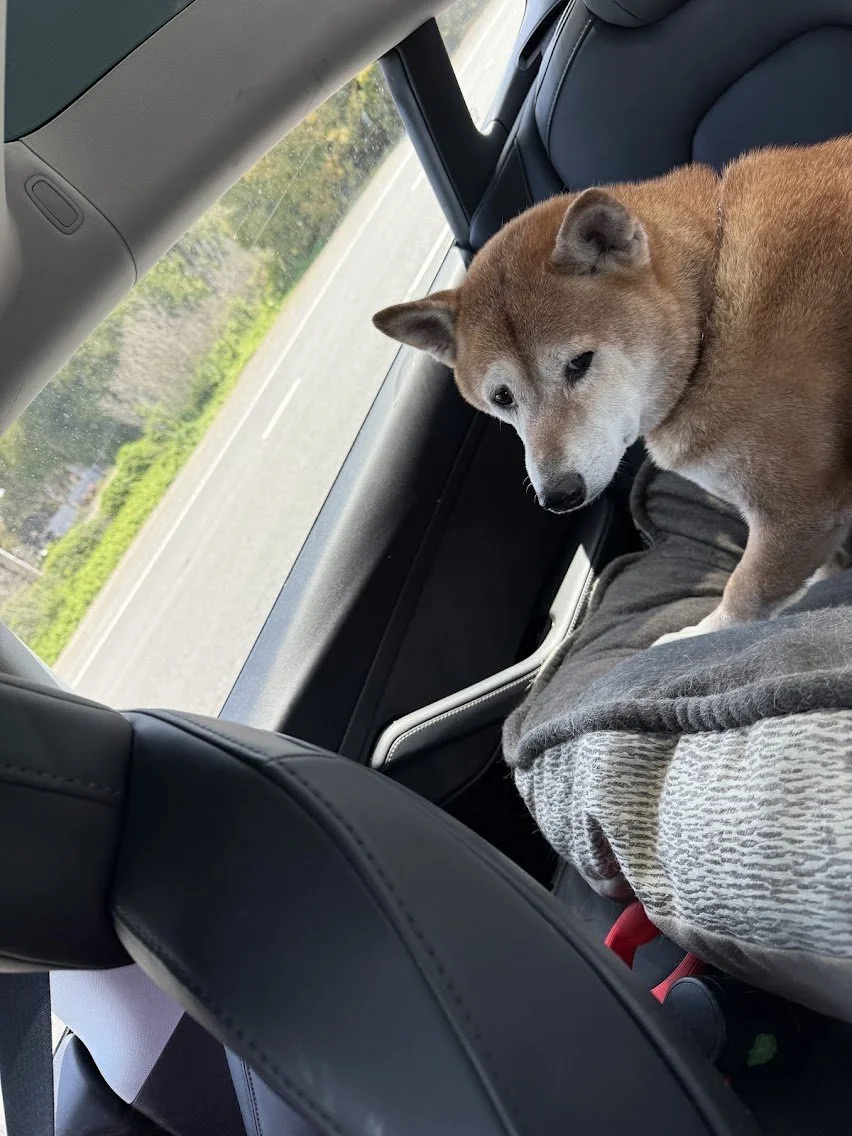
Last year, work required me to move from California to Washington. Flying would have been easier.
But there was Leo.
We worried about what air transport would mean for him—the fear and stress of traveling apart from us. So we drove from California to Washington with Leo.
In one sense, it was just another road trip. We had been arranging our travels around him for years. But this journey was different.
We weren't going on vacation.
We were moving our home.
The state changed. The address changed. The rooms changed. Our routines changed.
Leo's rule did not.
At night, he still needed to sleep in our bedroom, in his place in the corner.
That long drive north now feels like one of the clearest definitions of belonging I know. Home was changing from one state to another, but Leo was in the car with us.
So the family was still together.
Sometimes home is simply who makes the journey with you.
One Last Trip
On July 4 this year, my wife and I decided to spend some time at the Edgewater hotel.
Of course, Leo came.
We didn't know it then, but it would be the last time the three of us would spend time away from home together.
Our room overlooked the water, and Leo discovered the seagulls. He would stand at the balcony and watch them. I can see him there now: curious, alert, absorbed by those birds moving across the water.
At the time, it was simply another small moment on another family trip.
That is one of the difficult things about memory. The moments that later become precious rarely announce themselves when they happen.
Nobody told us:
Pay attention. This is the last trip.
So we didn't experience it as a goodbye.
We simply spent July 4 together.
My wife. Me. Leo.
And Leo watched the seagulls.
I am grateful that we didn't know. Because for that little while, nothing was ending.
We were simply together.
Belonging Is Made of Small Things
We tend to describe belonging with large words: family, country, culture, identity, home.
But perhaps belonging is actually constructed from very small things: the sound you expect when you open a door, a food bowl, a leash, a cabinet door that no longer gets kicked, a bedroom corner that remains empty, the silence where a Shiba squeak should have been.
These things seem insignificant while they are happening.
They become enormous when they stop.
After Leo died, the house did not physically change. And yet its geography did.
There are places where Leo should be.
I think grief notices those places before the mind does. You enter a room and, for a fraction of a second, some part of you still expects the world as it used to be.
Then memory catches up.
That fraction of a second is heartbreaking.
But perhaps it is also evidence of belonging.
What We Didn't Know
Leo had been struggling physically. He had undergone TPLO surgeries—knee surgeries commonly performed to repair a torn ligament. There was nothing about the surgeries themselves that explained what was happening, but afterward we watched him closely as he recovered and aged.
We could see that our Leo was changing.
He was deteriorating.
What we did not know was that something far more serious was happening inside him.
Leo had lymphoma.
By the time we understood the extent of it, the disease had spread to his lungs.
There is a particular cruelty in learning the explanation only when the explanation can no longer save the one you love. Suddenly, moments from the preceding weeks rearrange themselves in your memory. Things that seemed unrelated acquire meaning.
You wonder what you missed. You replay decisions. You ask whether you should have known.
But love cannot always diagnose what it sees.
Sometimes all it can do is remain.
And we remained.
5:15 pm
Eventually, there was one final decision left to make.
And my wife made it.
She chose to let Leo go with dignity rather than ask him to remain because we were not ready to lose him.
There are acts of love that feel nothing like love while you are performing them.
This was one of them.
On Friday afternoon, we were beside him. Our children could not physically be there, so we brought them into the room through FaceTime.
Our daughter was there.
Our son was there.
My wife was there.
I was there.
Leo's four people.
The same four people he had chosen as his world.
And at 5:15 p.m., he left us.
In those final moments, geography briefly became irrelevant. California and Washington were connected by a small screen.
The family was together.
Just as we had always tried to be.
The Gate
I have spent the last few years writing a series of novels called The Gate of Belonging. Across those books, I keep returning to questions that have followed me through much of my own life: What makes a place home? What do we carry when we leave one home for another? What remains when someone is gone? Can belonging survive distance, migration, death, and time?
The gate in my novels has always meant more to me than a physical object. People pass through it. Generations change around it. Some leave. Some return. Eventually, the gate remains while the people who once touched it become memory. That idea felt literary when I wrote it.
It feels different now.
Because every home contains its own gates.
There was a last time Leo walked through a particular doorway. A last road trip. A last hotel room. A last night in his corner. A last treat. A last time he heard one of us coming home. A last time he looked at us. We rarely recognize these moments as endings while they are happening. Life does not usually announce, Remember this. There will not be another.
It simply happens. And afterward, ordinary things become witnesses.
A leash is no longer just a leash. A treat cabinet is no longer just a cabinet. A corner of a bedroom is no longer just a corner.
An empty place becomes inhabited by absence.
This is something The Gate of Belonging has repeatedly tried to understand: objects and places survive moments, but what gives them meaning is the life that passed beside them.
There is a sentence from What the Gate First Knew that I have returned to many times:
“The melodies were different. The languages were different. The love was not.”
I wrote those words about people, cultures, and the strange continuities that survive our differences.
Today I read them differently.
Leo spoke none of our languages. And yet there was never any difficulty understanding the essential thing.
A squeak at the door. A kick at the toys. A lick against a bedroom door. A kick at the treat cabinet. A curled tail wagging because someone had finally come home.
Love did not require translation.
Maybe belonging doesn't either.
The Ones Who Witness Our Lives

Dogs have a peculiar relationship with human time. They do not know our résumés. They do not understand our ambitions. They don't care which countries we have visited, what positions we hold, or what other people think of us.
They simply witness us.
Leo witnessed eleven years of our family.
He knew us through routines rather than biographies. He knew our footsteps, voices, moods, departures and returns. He knew that a closed bedroom door containing my daughter required investigation. He knew that my son's video game had gone on long enough. He knew which cabinet contained the chicken treats. He knew where he slept.
And somehow, he knew when I was coming home.
Human beings spend enormous portions of our lives trying to establish where we belong. We make it complicated. We attach belonging to geography, nationality, language, ancestry, careers, houses and histories.
Leo didn't.
For him, belonging was remarkably precise.
Four people.
Wherever they happened to be.
Perhaps he understood something I have spent five novels trying to understand. Belonging is the accumulation of ordinary moments through which another living being learns:
This is where I am safe.
These are my people.
This is home.
Last year, when our home moved from California to Washington, we drove because Leo was coming with us.
On July 4, 2026, he came with us one last time and stood overlooking the water, watching the seagulls.
And on August 14, 2026, when it was time for Leo to make the one journey we could not make with him, his four people gathered around him as far as geography would allow.
Some of us were in the room. Some of us were on a screen. But all of us were there.
Leo came into our lives on August 28, 2015.
He left us on August 14, 2026, at 5:15 p.m.
Those dates describe the time we were given with him. They do not describe his belonging.
That has no ending date.
Leo
July 4, 2015 – August 14, 2026