What Does It Mean to Belong?
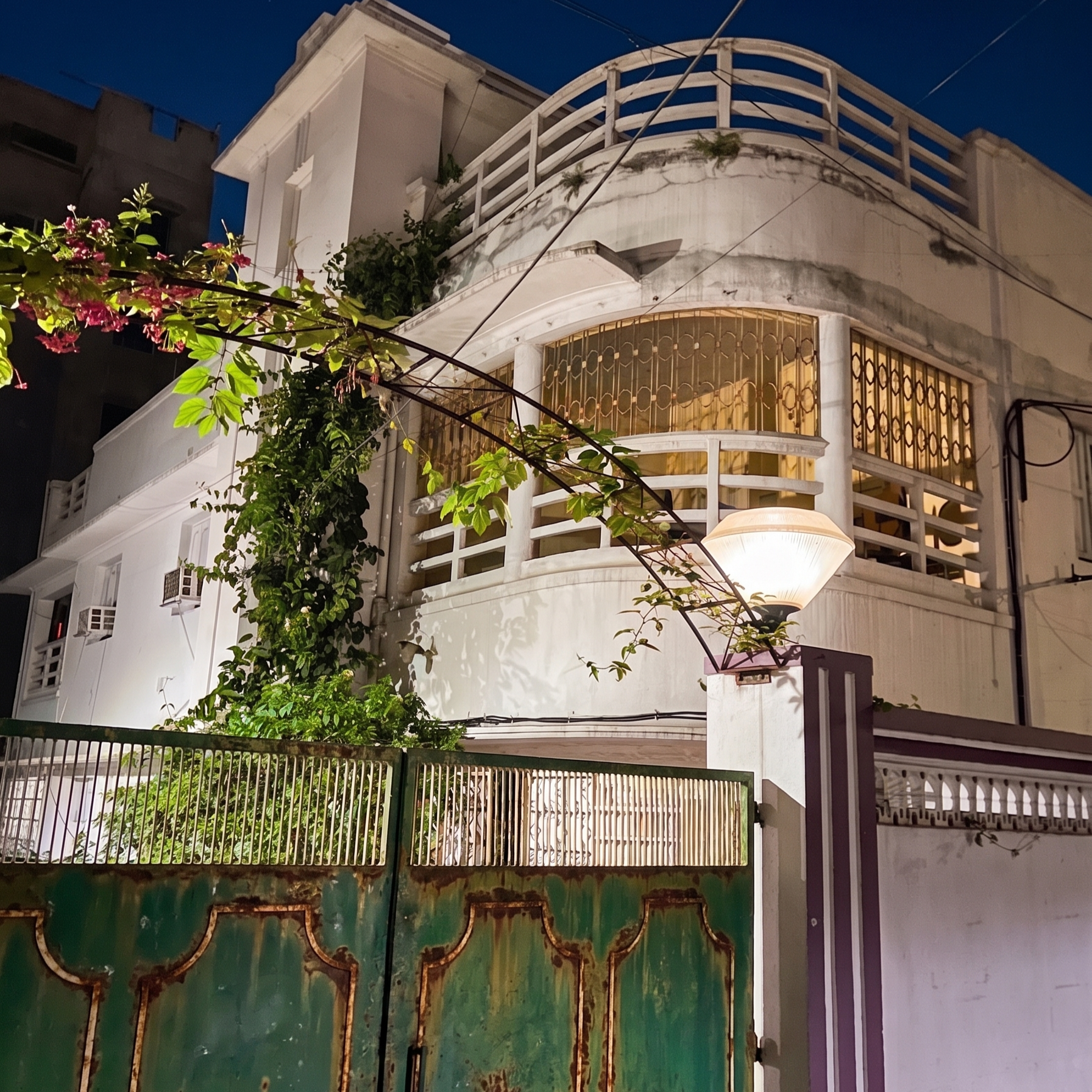
The green gate
There is a green gate in a quiet neighborhood called Apcar Gardens in Asansol. It is not remarkable. It has never appeared in a travel guide. Green paint weathered by monsoon after monsoon, opening onto a house where generations of my family lived ordinary lives.
The photograph here is the house where my maternal grandparents lived. It was where my mother, her sisters, and her brother grew up before life gradually carried them elsewhere. My parents later made their home in Burnpur, twenty minutes away, where my father worked for the Indian Iron and Steel Company, later part of SAIL, as a Civil and Structural Engineer after graduating from Bengal Engineering College, Shibpur.
As a child I never thought of these places as separate. One was where family gathered. The other was where I grew up. Together they became what I understood as home.
Yet that gate followed me everywhere.
When I left Burnpur, I thought I was leaving home. I thought distance could be measured in kilometers. I thought belonging could be measured by how often I returned.
Life had other ideas.
The world before I saw it
Looking back, perhaps my journey had begun years before I ever left India.
My mother had studied Geography. When I was still in primary school, she taught me how to draw the map of the world from memory. By the time I was in Class 4, I could sit with a blank sheet of paper and sketch every continent without looking at an atlas. I did not know then that one day I would live on three of them.
A few years later, when I was in Class 9, I began writing letters to embassies in New Delhi. Every few weeks an envelope arrived in our mailbox filled with brochures, maps and travel guides from countries I knew only through photographs. I read them until the pages became worn. Long before I traveled, I imagined.
The first departure
My first job took me to Chennai, though many people still called it Madras. I lived in Thiruvalluvar Nagar near Thiruvanmiyur, and every morning a company bus carried us across the city to Maraimalai Nagar. Before long I could tell where we were without looking out of the window. The rhythm of the journey became familiar long before the city itself did. Some evenings ended at Saravanaa Bhavan where a simple meal tasted reassuringly familiar after a long day. It reminded me that even in a city I barely knew, familiarity could be found in something as ordinary as dinner.
Without realizing it, I was learning that belonging often begins not with a city but with routine.
Then Belgium, in 1999.
Less than a week after my wedding I boarded a flight to Belgium to begin my new job. My wife remained in India while we waited for her visa, and I arrived alone with two suitcases, a new address and a life that had only just begun.
My first apartment was on Kempische steenweg, within walking distance of Philips in Hasselt. Every morning I walked to work, learning the neighborhood one street at a time. Across the road was a small dürüm shop run by two Turkish brothers. Before long they knew me by name and knew my order before I had to ask. In a country where almost everything felt unfamiliar, that small kindness quietly became part of everyday life.
The apartment was quiet in the evenings. My wife and I measured the first months of our marriage through international phone calls and the anticipation of the day she would finally join me.
Living in another country is not only learning a culture. You begin by translating words. Eventually you find yourself translating memories.
Later came America. New addresses. New responsibilities. New friendships. Boarding passes beyond counting. Airports became familiar the way kitchens are familiar. Friends scattered across continents. Time zones became arithmetic.
Something happened along the way that I had not planned for. The farther I traveled, the less certain I became about where home was.
Finding home again
My mother always made tea the same way. A small saucepan. Water first. Tea leaves simmering before anything else. She poured the tea into the cup before adding the milk. I made it that way in Belgium. I made it that way in California. The saucepan changed. The kitchen changed. The water changed. Nothing else did.
The smell of rain still takes me back to West Bengal, even when it is falling somewhere else entirely.
I used to think you either had belonging or you lost it. I am no longer sure it works that way.
It shows up in small places. Sunday phone calls that became a tradition nobody declared. Recipes nobody wrote down. A story a grandparent tells for the hundredth time because someone young is hearing it for the first time. Friendships that survive eleven hours of difference. Neighbors who stop being neighbors.
We leave believing we carry our past with us. Years later we find the past has quietly rearranged itself around every place we have lived.
People become part of the landscape. Cities acquire emotional geography. A street corner becomes inseparable from a conversation. A station remembers a goodbye. A café holds the beginning of a friendship. A house becomes precious not for its architecture, but for who laughed inside it.
I have tried to paint that geography as well as write it. Forts. Festivals. Skylines. Places I carried rather than places I visited.
Memory is a remarkable architect. It builds houses inside us that no relocation can demolish.
Even today I can close my eyes and walk through the house in Apcar Gardens. I remember the green gate before I remember the rooms behind it. I remember voices drifting through open windows. I remember arriving without knocking, because family never needed an invitation. Memory has preserved details that time itself has long since altered.
Many of us belong to more than one place. Our identities are built from overlapping circles rather than straight lines. We carry languages that surface without warning. Customs that outlive the countries they came from. Affections that ignore borders entirely.
The gate
Looking back, the green gate was never important for what it enclosed. It was a threshold. The place where departures begin and return become possible.
I did not recognize that when I left for Chennai. I thought I was simply leaving home for my first job. I could not have imagined that one departure would lead to Belgium, America, friendships across continents and a life lived between cultures. Some thresholds reveal themselves only years after we have crossed them.
I did not know this image would stay with me for decades. I certainly did not know it would become the emotional center of a series of novels. It simply waited, the way meaningful things do.
If years of travel have taught me one thing, it is that belonging is not found once and kept. It is practiced. We practice it by staying curious about people unlike ourselves. By making room at the table for new traditions without discarding the old ones. By remembering where we came from while allowing ourselves to be changed by where we have been.
The gate is still there. Older now. Repainted more than once. Time has done what time always does.
Every time I return, before I notice the balcony or the windows or the house itself, I look for the gate. It is the first thing I recognize. Perhaps that is why it found its way into my novels long before I understood what it meant.
Some journeys begin with a departure.
Mine began with a green gate.
Neil Banerjee is the author of The Gate of Belonging, a literary fiction series following the Das-Kaur family across Kolkata, Berlin, Boston, Copenhagen and Delhi. What the Gate First Knew and What the Gate Remembers are available now. Three more books are in progress. This is the first of a series of essays on migration, memory and the places we carry.
More: about Neil · the novels · paintings · press and media kit · questions
Find the books: Goodreads · Amazon · Notion Press (India)
Elsewhere: LinkedIn · Facebook · Instagram · X